Directive Principles of State Policy (DPSP): UPSC Notes
The Directive Principles of State Policy (DPSP) are a set of constitutional guidelines and ideals enshrined in Part IV of the Indian Constitution, specifically covering Articles 36 to 51. You can think of them as a moral compass for the government. They dictate the socio-economic goals that the State must strive to achieve while formulating laws and policies.
Unlike Fundamental Rights, the Directive Principles are non-justiciable. This means a citizen cannot approach the courts to legally enforce them if the government fails to implement them. However, Article 37 clearly declares that these principles are "fundamental in the governance of the country", placing a heavy political and moral obligation on the State.
The primary objective of the DPSP is to establish a "Welfare State" in India. While Fundamental Rights ensure political democracy by protecting individual liberties, the Directive Principles aim to promote social and economic democracy by minimising inequalities and providing for the vulnerable. The framers of the Indian Constitution borrowed this concept from the Irish Constitution of 1937, which had originally adapted it from the Spanish Constitution.
Historical Background and Key Features
Imagine a newly independent nation with massive poverty, widespread illiteracy, and virtually empty state coffers. How do you promise a comprehensive welfare state to millions of citizens without immediately getting sued for failing to deliver? That is exactly the historical context that explains why the Directive Principles exist in their current form.
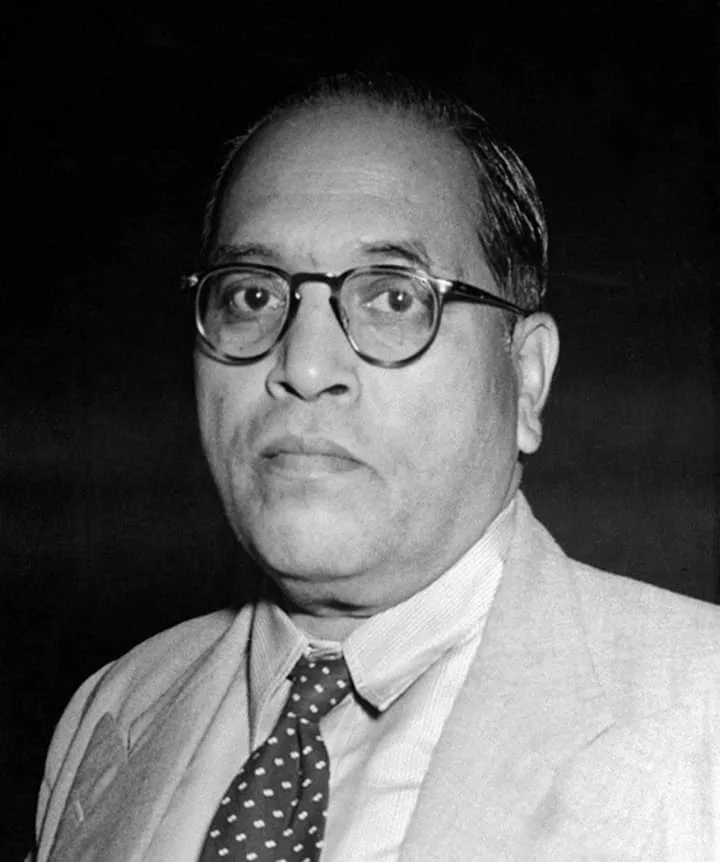
The concept was borrowed from the Irish Constitution of 1937. During the Constituent Assembly debates, Dr. B.R. Ambedkar proudly called the Directive Principles a "novel feature" of the Indian Constitution. To help members understand their function, he equated them to the "Instrument of Instructions" that were issued to the Governor-General and colonial Governors under the Government of India Act of 1935. In his own words, "What is called Directive Principles is merely another name for the instrument of instructions."
The defining nature of these principles is their non-justiciability. You cannot drag the government to the Supreme Court for not providing a uniform civil code or a living wage. However, they carry a heavy political sanction. In a democracy, the ultimate court is the court of the people. A government that ignores these directives risks being voted out in the next election.
Their ultimate objective is to establish social and economic democracy. They represent a clear departure from the colonial police state, aiming instead to build a modern Welfare State.
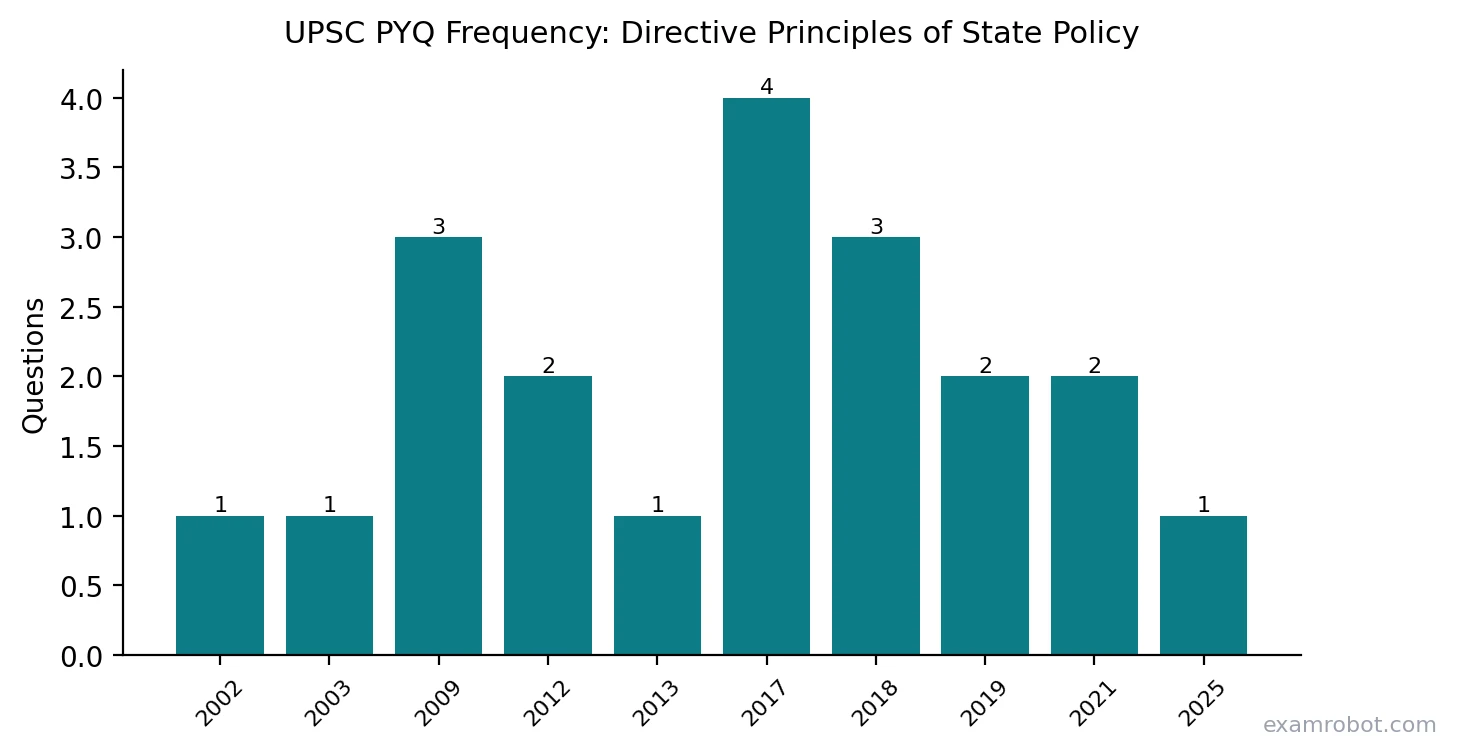
Common Mistake: Aspirants often fall into the trap of selecting options that say DPSP aims to make India an "advanced capitalist country". The UPSC has used this exact phrasing to confuse students. Remember, the objective is strictly to establish a "Welfare State" and socio-economic democracy.
Classification of Directive Principles
The Constitution of India does not formally classify the Directive Principles into neat boxes. However, based on their philosophical content and the historical movements that inspired them, academic scholars and the UPSC categorise them into three distinct streams. Understanding these streams helps you remember the articles logically rather than by rote.
The Socialistic Principles aim at providing social and economic justice. They are the blueprint for a democratic socialist state, directing the government to minimise inequalities in income, status, and opportunities. Articles 38, 39, 41, 42, 43, 43A, and 47 fall under this umbrella. They focus on workers' rights, equitable resource distribution, and public health.
The Gandhian Principles are based on the ideology of Mahatma Gandhi. They reflect the programme of reconstruction enunciated by Gandhi during the national freedom struggle. To realise his dreams, the framers included directives to organise village panchayats (Article 40), promote cottage industries (Article 43), uplift Scheduled Castes and Scheduled Tribes (Article 46), prohibit intoxicating drinks (Article 47), and ban cow slaughter (Article 48).
The Liberal-Intellectual Principles reflect the ideology of modern liberalism. They direct the State to secure a Uniform Civil Code (Article 44), provide early childhood care and education (Article 45), separate the judiciary from the executive (Article 50), and promote international peace (Article 51).

Practice Question (IAS 2012)
Consider the following provisions under the Directive Principles of State Policy as enshrined in the Constitution of India:
1. Securing for citizens of India a uniform civil code
2. Organizing village Panchayats
3. Promoting cottage industries in rural areas
4. Securing for all the workers reasonable leisure and cultural opportunities. Which of the above are the Gandhian Principles that are reflected in the Directive Principles of State Policy?
- 1, 2 and 4 only
- 2 and 3 only
- 1, 3 and 4 only
- 1, 2, 3 and 4
Correct Answer: b. Organizing village Panchayats (Article 40) and promoting cottage industries (Article 43) are directly based on Gandhian ideology.
Article 36 to 51 Breakdown
You cannot afford to be vague about the specific articles in Part IV. The UPSC Prelims frequently tests exact article numbers and their corresponding provisions. Below is the complete list you must memorise.
| Article | Provision |
|---|---|
| Article 36 | Defines "State" (has the same meaning as Article 12 in Part III). |
| Article 37 | Application of the principles (declares them non-justiciable but fundamental in governance). |
| Article 38 | State to secure a social order for the promotion of welfare of the people (minimise inequalities in income, status, facilities). |
| Article 39 | Certain principles of policy to be followed by the State (adequate livelihood, equitable distribution of resources, equal pay for equal work). |
| Article 39A | Equal justice and free legal aid. |
| Article 40 | Organisation of village panchayats as units of self-government. |
| Article 41 | Right to work, to education, and to public assistance in cases of unemployment, old age, sickness. |
| Article 42 | Provision for just and humane conditions of work and maternity relief. |
| Article 43 | Living wage and decent standard of life for workers; promotion of cottage industries. |
| Article 43A | Participation of workers in the management of industries. |
| Article 43B | Promotion of voluntary formation and autonomous functioning of co-operative societies. |
| Article 44 | Uniform Civil Code (UCC) for the citizens throughout the territory of India. |
| Article 45 | Provision for early childhood care and education to children below the age of six years. |
| Article 46 | Promotion of educational and economic interests of Scheduled Castes, Scheduled Tribes, and other weaker sections. |
| Article 47 | Duty of the State to raise the level of nutrition, standard of living, and improve public health (prohibiting intoxicating drinks and drugs). |
| Article 48 | Organisation of agriculture and animal husbandry on modern lines; prohibiting slaughter of cows and calves. |
| Article 48A | Protection and improvement of environment and safeguarding of forests and wildlife. |
| Article 49 | Protection of monuments, places, and objects of national importance. |
| Article 50 | Separation of judiciary from executive in the public services of the State. |
| Article 51 | Promotion of international peace and security, just relations between nations, and respect for international law. |
Practice Question (IAS 2002)
Which one of the following Articles of the Directive Principles of State Policy deals with the promotion of international peace and security?
- 51
- 48 A
- 43 A
- 41
Correct Answer: a. Article 51 explicitly directs the State to promote international peace and security.
Practice Question (CDS-I 2006)
Which of the following are stated as Directive Principles of State Policy by Article 51 of the Constitution of India? The State shall endeavor to
1. promote international peace and security.
2. maintain just and honorable relations between nations.
3. encourage settlement of international disputes by arbitration.
- 1, 2 and 3
- 2 and 3 only
- 1 and 2 only
- 1 and 3 only
Correct Answer: a. All three provisions are clearly listed under Article 51.
Fundamental Rights vs DPSP (Relationship and Conflict)
Think of Fundamental Rights as strict boundaries the State cannot cross, acting as negative obligations. Directive Principles, on the other hand, are positive instructions or goals the State must actively chase. The central constitutional dilemma for decades was simple: what happens when chasing a socio-economic goal requires crossing a fundamental boundary?
This conflict triggered a fascinating legal battleground between the Parliament and the Supreme Court. The evolution of this relationship is highly tested.
In the Champakam Dorairajan Case (1951), the Supreme Court ruled that Fundamental Rights are supreme. If a conflict arises, the Directive Principles must conform to and run as subsidiary to the Fundamental Rights. Following this, the Parliament began amending Fundamental Rights to implement the directives.
The friction peaked with the Golaknath Case (1967), where the Supreme Court declared that Fundamental Rights are sacrosanct and cannot be amended by Parliament, even for the sake of implementing the DPSP. The Parliament retaliated with the 24th and 25th Amendment Acts, asserting its power to amend Fundamental Rights and explicitly giving primacy to Article 39(b) and (c) over the fundamental rights to equality (Article 14), freedom (Article 19), and property (Article 31).
In the landmark Kesavananda Bharati Case (1973), the Supreme Court upheld the 25th Amendment but introduced the Basic Structure Doctrine, placing an ultimate check on parliamentary power. Unfazed, the government passed the 42nd Amendment Act in 1976, attempting to give blanket legal primacy to all Directive Principles over Articles 14 and 19.
Finally, the dust settled with the Minerva Mills Case (1980). The Supreme Court struck down the 42nd Amendment's blanket primacy. The Court beautifully articulated that the Indian Constitution is founded on the "bedrock of balance" between Fundamental Rights and Directive Principles. To give absolute primacy to one over the other is to disturb the harmony of the Constitution. Today, the rule of Harmonious Construction prevails.

Practice Question (CAPF 2019)
Which one of the following statements regarding the Directive Principles of State Policy is NOT correct?
- State shall follow the Directive Principles of State Policy both in the matter of administration as well as in the making of laws
- The Directive Principles of State Policy embody the object of the State under the republican Constitution
- The Directive Principles of State Policy have precedence over the Fundamental Rights in case of conflict between the two
- The Directive Principles of State Policy are not enforceable in the Courts
Correct Answer: c. The Minerva Mills case established a balance; DPSP do not have blanket precedence over Fundamental Rights.
Practice Question (CAPF 2013)
Consider the following statements :
1. While the Fundamental Rights constitute limitations on State action, the Directive Principles are in the nature of instruments of instruction to the government of the day to do certain things.
2. The Directive Principles are justiciable in nature.
3. The Directive Principles are fundamental in the governance of the country.
- 1, 2 and 3
- 1 and 3 only
- 1 and 2 only
- 2 only
Correct Answer: b. Statement 2 is incorrect as they are non-justiciable. Statements 1 and 3 are correct.
Constitutional Amendments to DPSP
The Constitution is a living document. Over the decades, Parliament has added new directives to address emerging socio-economic realities. You must map exactly which amendment added which article, as this is a favourite area for Prelims examiners.
| Amendment Act | Articles Added or Modified |
|---|---|
| 42nd Amendment Act (1976) | Added four new directives: Article 39 (healthy development of children), Article 39A (free legal aid), Article 43A (participation of workers in management), and Article 48A (environment protection). |
| 44th Amendment Act (1978) | Added Article 38(2), requiring the State to minimise inequalities in income, status, facilities, and opportunities. |
| 86th Amendment Act (2002) | Changed the subject matter of Article 45. It shifted elementary education to Fundamental Rights (Article 21A) and amended Article 45 to mandate early childhood care for children below 6 years. |
| 97th Amendment Act (2011) | Added Article 43B regarding the promotion of co-operative societies. |

Common Mistake: Do not confuse the current status of the Right to Education. Elementary education (6 to 14 years) is now a Fundamental Right under Article 21A. The current Article 45 in the DPSP strictly deals with "early childhood care" for children below 6 years.
Practice Question (IAS 2017)
Which principle among the following was added to the Directive Principles of State Policy by the 42nd Amendment to the Constitution?
- Equal pay for equal work for both men and women
- Participation of workers in the management of industries
- Right to work, education and public assistance
- Securing living wage and human conditions of work to workers
Correct Answer: b. Participation of workers in the management of industries (Article 43A) was added by the 42nd Amendment.
Implementation of DPSP and Mains Perspective
These directives are not merely lofty ideals resting on paper. Successive governments have actively translated many of these non-justiciable instructions into hard, enforceable laws and welfare schemes.
For instance, the directive to organise village panchayats (Article 40) was given constitutional teeth through the 73rd Constitutional Amendment Act of 1992. The Right to Work (Article 41) is legally backed by the Mahatma Gandhi National Rural Employment Guarantee Act (MGNREGA). The State ensures a minimum standard of living for workers (Article 43) through the Minimum Wages Act of 1948. The upliftment of vulnerable sections (Article 46) is protected by the Scheduled Castes and Scheduled Tribes (Prevention of Atrocities) Act of 1989. Furthermore, the duty to improve public health and nutrition (Article 47) is executed through massive schemes like the National Health Mission and the Mid-Day Meal Scheme (now PM POSHAN).
For the Mains examination, the application of these principles is tested analytically, particularly concerning Article 44.
Mains Question (GS2 2015): Discuss the possible factors that inhibit India from enacting for its citizens a uniform civil code as provided for in the Directive Principles of State Policy. (Answer in 200 words)
Examiner Analysis: The UPSC examiner pattern shows a fascinating evolution regarding Article 44. In 2015, the framing focused on internal structural and socio-political "inhibiting factors". Over the years, this has shifted toward analysing the broader institutional morality and balancing Indian constitutional identity in a comparative global context. The examiner expects you to move beyond basic definitions and evaluate the friction between competing constitutional ideals.
Answer Approach: Begin by citing Article 44 and defining the Uniform Civil Code as a common set of laws governing marriage, divorce, inheritance, and adoption. The core of your answer must address the constitutional overlap and conflict. The primary inhibiting factor is the tension between the DPSP mandate (Article 44) and the Fundamental Right to religious freedom (Article 25). You must discuss the political sensitivities of personal laws, the diversity of customary practices even within the same religion, and the challenge of achieving gender justice without alienating minority communities. Conclude with the Supreme Court's stance that a UCC should be achieved through consensus rather than imposition.
Directives Outside Part IV and Criticisms
Before we conclude, we must look at the edges of the syllabus. Not all constitutional directives are neatly packed within Part IV. There are certain non-justiciable instructions located in other parts of the Constitution that carry the same weight as the DPSP.
These include Article 335 in Part XVI, which states that the claims of SCs and STs to services and posts must be considered consistently with the maintenance of administrative efficiency. In Part XVII, Article 350A directs the State to provide adequate facilities for instruction in the mother tongue at the primary stage of education. Similarly, Article 351 directs the Union to promote the spread and development of the Hindi language.
Despite their noble intentions, the Directive Principles have faced sharp academic criticism. The most famous critique came from K.T. Shah in the Constituent Assembly, who called them "a cheque on a bank, payable only when the resources of the bank permit." Critics argue they are toothless due to their lack of legal force. Furthermore, scholars point out that they are illogically arranged, mixing modern liberal ideas with traditional Gandhian thoughts without a consistent classification. Finally, they have historically caused constitutional friction, leading to conflicts between the Legislature and the Judiciary, as well as between the Centre and the States over implementation priorities.
DPSP in the News
Connecting static syllabus points to current affairs is vital for scoring high in UPSC. Here is how recent events tie back to Part IV:
- Bhubaneswar Declaration (08 JUL 2026): The government adopted the Bhubaneswar Declaration to strengthen Tribal Research Institutes (TRIs), transforming them into Knowledge and Cultural Resource Centres. This directly connects to Article 46, fulfilling the State's duty to promote the educational and economic interests of Scheduled Tribes.
- AISHE Reports Released (08 JUL 2026): The Ministry of Education released the All India Survey on Higher Education data. Tracking educational progress connects to Article 41, which directs the State to secure the right to education.
- Policy Push for One Health (2025): The ongoing push for veterinary infrastructure and the "One Health" approach aligns perfectly with Article 47 (improving public health) and Article 48 (organising animal husbandry on modern lines).
Stay updated with these developments through the Current Affairs Carta.
Frequently Asked Questions
What are the Directive Principles of State Policy article 36 to 51?
They are a set of constitutional guidelines in Part IV of the Indian Constitution that instruct the State to secure social and economic justice, establishing a welfare state.
What is DPSP called by Ambedkar?
Dr. B.R. Ambedkar called the Directive Principles a "novel feature" of the Constitution and compared them to the "Instrument of Instructions" from the Government of India Act, 1935.
What are the three types of Directive Principles of State Policy?
Though not formally classified in the Constitution, they are academically categorised into three types: Socialistic, Gandhian, and Liberal-Intellectual principles.
How many directive principles of state policy are there?
There are broadly 15 main articles (36 to 51), but with constitutional amendments adding clauses like 39A, 43A, 43B, and 48A, there are over 20 specific directives guiding the State.
What is the difference between fundamental rights and directive principles of state policy?
Fundamental Rights are justiciable, legally enforceable limitations on the State that ensure political democracy. DPSPs are non-justiciable, positive obligations on the State that promote socio-economic democracy.
Which country did India borrow the Directive Principles from?
India borrowed the DPSP from the Irish Constitution of 1937, which had originally copied the concept from the Spanish Constitution.